EN
 es
 ru
 CN

The right flexitank for chemical transportation should be selected according to the exact chemical composition, concentration, temperature, viscosity, density and transport classification of the cargo.
A flexitank suitable for propylene glycol may not automatically be suitable for a plasticizer, polyether or surfactant. Before any bulk chemical transport shipment, the supplier should review the Safety Data Sheet (SDS) and confirm that the liquid is non-dangerous goods and chemically compatible with all product-contact materials.
The Container Owners Association (COA) specifically requires flexitank construction materials to remain resistant, inert and free from degradation or reaction with the cargo at filling and transport temperatures.
Chemical flexitanks are primarily used for compatible non-hazardous liquid chemicals.
BLT lists applications including:
Polyether and polyols
Ethylene glycol
Propylene glycol
Natural and synthetic latex
Plasticizers
Surfactants and emulsifiers
Base oils and lubricants
Glycerine
Resins
Adhesives and glues
Water-based paints and inks
Certain liquid fertilizers
Compatible pharmaceutical and cosmetic ingredients
BLT's standard chemical flexitank is available in capacities from 16–26 kL, with a stated working temperature range of -20°C to +60°C.
However, being listed within a general chemical category does not replace a cargo-specific compatibility assessment.
No. "Non-hazardous" is a regulatory classification; it does not prove material compatibility.
Two chemicals with similar commercial names can differ significantly in:
Concentration
Solvent content
pH
Additives
Molecular composition
Temperature
Viscosity
COA guidance requires the shipper to provide an SDS because even cargo that is not regulated as dangerous goods may still have properties that affect safe flexitank transport.
For this reason, approval should always be based on the specific product formulation, rather than a broad description such as "polyol" or "industrial chemical."
Five factors should be reviewed before loading.
| Selection Factor | Why It Matters |
|---|---|
| Chemical composition | Determines compatibility with film, valve and seals |
| Concentration | A stronger formulation may behave differently from a diluted product |
| Filling temperature | High temperature can change both chemical activity and flexitank performance |
| Viscosity | Influences filling and discharge efficiency |
| Density | Determines safe payload at a given tank volume |
The liquid-contact film, valve body, seals and fittings must resist the cargo throughout the journey.
BLT's chemical flexitank uses specialized films and corrosion-resistant valves for chemical applications. The company states that its chemical flexitank is intended for compatible non-hazardous chemicals including polyethers, glycols, latex and plasticizers.
For products containing aggressive solvents or strongly reactive ingredients, additional technical evaluation is essential.
Polyether transportation requires particular attention to viscosity and temperature.
Many polyethers and polyols become significantly more viscous as temperature falls. A product that pumps easily during loading may become difficult to discharge after several weeks in a colder climate.
Before shipment, confirm:
Exact polyether grade
Density
Viscosity at different temperatures
Loading temperature
Minimum pumpable temperature
Destination climate
Required discharge temperature
Heating facilities available at destination
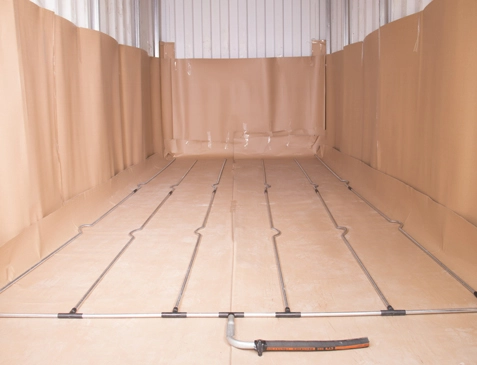
If the cargo becomes highly viscous at lower temperatures, a compatible heating solution may be needed before discharge.
The objective is not to keep the cargo continuously hot during the entire voyage, but to make sure it can be returned to a safe and practical pumping viscosity at destination.
A standard chemical flexitank should only be filled within its approved operating-temperature range.
BLT lists -20°C to +60°C for its standard chemical flexitank. For cargo loaded at higher temperatures, BLT offers a separate heat-resistant flexitank designed for filling temperatures from +60°C to +120°C.
This distinction is important.
Do not simply load a hot chemical into a standard flexitank because the cargo will eventually cool down. The liner and valve system must be suitable for the actual filling temperature, which is often the highest thermal stress point.
Ethylene glycol and propylene glycol are common flexitank cargoes when the specific grade is classified as suitable and material compatibility has been confirmed.
For glycol shipments, evaluate:
Product purity
Additives
Water content
Density
Cargo classification
Loading temperature
Required cleanliness level
High-purity glycol used for pharmaceutical, cosmetic or technical applications may also require stricter contamination controls than general industrial grades.
A single-use chemical flexitank can reduce cross-contamination concerns associated with reusable transport equipment, but clean pumps and hoses are still essential.
Natural and synthetic latex require careful contamination and temperature management.
Temperature extremes may affect product stability, while contamination can cause coagulation or quality deterioration.
For latex shipments, the shipper should confirm:
Exact latex type
Solids concentration
Stabilizer system
Acceptable temperature range
Sensitivity to contamination
Required unloading conditions
The flexitank supplier should evaluate the complete formulation rather than approve the cargo simply because it is described as "latex."
These products vary widely in chemical structure, so compatibility testing is particularly important.
Plasticizers may have very different solvent characteristics from surfactants, while some emulsifiers contain complex blends of active ingredients.
When planning these shipments, provide the supplier with:
Full product name
SDS
Concentration
Density
Viscosity
Filling temperature
Expected transit temperature
Loading volume
Origin and destination
This information allows the flexitank manufacturer to assess the film, valve and seal compatibility before shipment.
Conventional flexitanks should not be used for cargo classified as Dangerous Goods under applicable transport regulations.
The current IMO IMDG Code 2024 Edition, including Amendment 42-24, became mandatory on January 1, 2026 and governs dangerous goods transported by sea.
COA guidance likewise bases flexitank suitability on non-dangerous cargo and requires the SDS to be reviewed before transport.
If a substance is classified as regulated Dangerous Goods, an approved alternative such as an appropriate ISO tank or other certified dangerous-goods packaging should be considered instead.
Yes. High viscosity can create operational problems even when the chemical is fully compatible with the flexitank.
Viscous cargo can cause:
Slow filling
Extended discharge time
High residual cargo
Pump cavitation
Hose blockage
Greater dependence on temperature
Polyether, polyols, resins and certain plasticizers are common examples where viscosity should be evaluated before shipment.
In some cases, heating before unloading can significantly improve cargo recovery.
Yes. A 24,000-liter flexitank does not mean every chemical can be loaded to 24,000 liters.
For example, a liquid with a density of 1.15 kg/L would weigh approximately:
24,000 L × 1.15 kg/L = 27,600 kg
That may exceed the allowable container or route payload once the container and flexitank system are included.
For high-density chemicals, the safe loading volume may therefore need to be reduced.
Flexitank selection should always consider both volume and mass.
For chemical cargo, a supplier should normally receive:
Current SDS
Exact chemical/product name
Chemical concentration
Density
Viscosity
pH where relevant
Filling temperature
Expected transport temperature
Minimum discharge temperature
Required payload
Route and transit duration
Previous flexitank transport history, if available
Sending only the cargo name is rarely enough for a professional compatibility assessment.
The right transport system depends on cargo classification, quantity and delivery requirements.
| Transport Method | Best Suited For |
|---|---|
| Flexitank | Large-volume compatible non-hazardous liquids |
| IBC | Smaller lots and multi-drop distribution |
| ISO tank | Repeated bulk shipments and many specialized chemical applications |
| Dangerous-goods tank | Regulated hazardous chemicals requiring certified equipment |
BLT positions chemical flexitanks as a high-payload, single-use alternative for compatible non-hazardous bulk liquids transported by road, rail and sea.
Choosing the right flexitank for chemical transportation starts with the chemical itself—not tank capacity or price.
For polyether, glycol, latex, plasticizers and other non-hazardous liquid chemicals, review the SDS, formulation, density, viscosity, filling temperature and discharge requirements before selecting the flexitank.
For polyether transportation and other high-viscosity cargoes, temperature behavior deserves particular attention because it can determine whether the cargo can be efficiently unloaded at destination.
A properly selected chemical flexitank can make international bulk chemical transport more efficient, but only when cargo compatibility has been technically confirmed before loading.
Yes, compatible non-hazardous liquid chemicals can be transported in properly selected flexitanks.
Examples include polyether, glycols, latex, plasticizers, surfactants, emulsifiers and certain resins.
Yes. The SDS is essential for classification, hazard assessment and compatibility review.
No. Regulated Dangerous Goods require transport equipment approved for their classification.
High viscosity can slow discharge and increase residual cargo, particularly in cold conditions.
Only if the filling temperature falls within its approved range. Higher-temperature cargo may require a heat-resistant flexitank.