EN
 es
 ru
 CN

Choose a 220V electric heating pad when the unloading site has a compatible 220V electrical supply and moderate heating requirements. Choose a 380V system when the receiving facility is equipped for 380V power and the specified heater configuration requires it.
The important point is that voltage alone does not determine heating speed. Heating performance depends on the heater's rated power, heated surface area, cargo volume, starting temperature, viscosity, ambient conditions, and target discharge temperature.
For flexitank buyers, the safest approach is therefore to confirm the receiving site's electrical infrastructure before ordering the heating system.
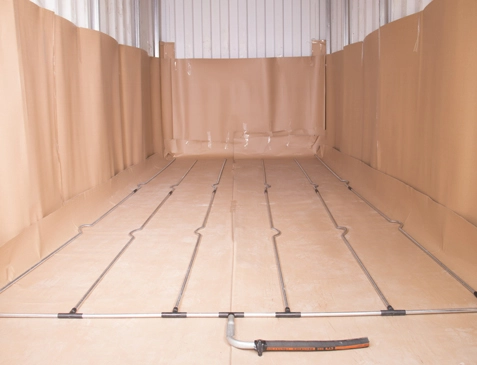
Both versions use electrical resistance heating to transfer heat through the bottom of the flexitank. BLT's electric system uses resistance wire, aluminum foil and thermal insulation felt, with 220V and 380V configurations available.
| Selection Factor | 220V Heating Pad | 380V Heating Pad |
|---|---|---|
| Power supply | Compatible 220V circuit required | Compatible 380V circuit required |
| Typical site consideration | Warehouses or facilities with suitable 220V supply | Industrial sites equipped with suitable 380V supply |
| Heating method | Electrical resistance heating | Electrical resistance heating |
| Temperature control | Depends on heater/control configuration | Depends on heater/control configuration |
| Steam required | No | No |
| Best selection basis | Site electrical supply + cargo requirement | Site electrical supply + cargo requirement |
BLT specifies its electric heating pad at approximately 5.5 m × 1.2 m × 2 sections, making it suitable for installation beneath a flexitank inside a standard container.
Not necessarily.
A 380V label by itself does not mean that the system will heat the cargo faster. What matters more is the actual heating power in kilowatts and how efficiently that energy is transferred into the liquid.
For example, heating time can change significantly depending on:
Initial cargo temperature
Ambient temperature
Cargo density and viscosity
Melting or softening point
Flexitank volume
Heating-pad power
Insulation conditions
Required unloading temperature
This is particularly important with products such as oils, syrups, additives and certain non-hazardous chemical liquids. A cargo that only needs a moderate viscosity reduction may have very different heating requirements from a product that has partially solidified during winter transportation.
Buyers should therefore avoid specifying 380V only because they assume "higher voltage means faster heating."
An electric heating pad 220V is suitable when the destination has a stable and compatible 220V electrical supply and the heating system's power requirement can be supported safely.
It can be particularly practical when:
No steam system is available at the unloading site
The receiving warehouse already provides compatible 220V power
Controlled heating is preferred before discharge
The cargo becomes more viscous at low temperatures
The operator needs a cleaner alternative to steam heating
An electric heating pad 220 volt system can therefore be useful for warehouses, distribution facilities and other receiving sites where electrical infrastructure is easier to access than steam.
However, the buyer should confirm more than voltage. Frequency, phase, connector type, circuit capacity and the heater's rated electrical load should all be checked with the receiving facility before shipment.
A 380V configuration is generally more appropriate when the destination facility already operates a compatible industrial electrical system and the selected flexitank heater has been designed for that supply.
This can be relevant for:
Refineries
Chemical processing facilities
Large industrial warehouses
Bulk liquid terminals
Manufacturing plants with industrial power infrastructure
The decision should still be based on the actual heater specification rather than voltage alone.
A common sourcing mistake is ordering the heating pad according to the electrical standard at the shipping origin. The more important location is usually the discharge point, because that is where the flexitank may need to be heated before unloading.
Electric flexitank heating pads are mainly used for liquids that become highly viscous or begin to solidify when temperatures fall.
Typical applications may include:
Palm oil and other edible oils
Industrial oils
Lubricants
Syrups and food ingredients
Selected liquid additives
Resins and compatible industrial liquids
Other non-hazardous products requiring controlled warming before discharge
BLT identifies its electric heating system as suitable for cargoes that can solidify at low temperatures or require specific temperature conditions. Unlike steam systems, an electric heating pad requires an appropriate electrical circuit at the unloading site and does not require condensate discharge.
Before specifying a system, check the cargo's pour point, viscosity-temperature curve, recommended storage temperature and maximum allowable temperature.
These parameters are more useful for heater selection than simply telling the supplier that the product is "high viscosity."
For an accurate recommendation, provide the heating-pad supplier with operating data rather than only the flexitank capacity.
The most useful information includes:
1. Cargo name and properties
Provide the product name, density, viscosity and relevant temperature characteristics.
2. Loading temperature
This helps establish the starting condition of the cargo.
3. Expected temperature at destination
Winter shipments may require significantly different heating preparation from warm-climate routes.
4. Target discharge temperature
The cargo normally only needs to reach a temperature at which it can be discharged efficiently. Unnecessary overheating wastes energy and may affect product quality.
5. Electrical supply at the unloading site
Confirm whether 220V or 380V is actually available, together with phase, frequency and available circuit capacity.
6. Required unloading schedule
If the terminal has a limited unloading window, heating requirements should be considered before the container arrives.
BLT offers electric, rubber-hose steam and iron-tube steam heating systems. The main site requirement differs: electric pads require electrical infrastructure, while steam heating pads require a steam supply.
The choice mainly depends on cargo requirements and the infrastructure available at the receiving facility.
| Factor | Electric Heating Pad | Steam Heating Pad |
|---|---|---|
| Energy source | Electricity | Steam |
| BLT configurations | 220V / 380V | Rubber or iron tube systems |
| Steam boiler required | No | Yes |
| Condensate handling | No | Depends on system |
| Temperature-sensitive cargo | Suitable when properly controlled | Requires appropriate steam control |
| Site selection priority | Electrical infrastructure | Steam infrastructure |
An electric solution can be especially useful where no steam system is available. BLT notes that electric heating allows temperature adjustment while eliminating the need for steam infrastructure at the discharge site.
Choosing between a 220V and 380V electric flexitank heating pad should start with the receiving site's power supply and the cargo's actual heating requirement.
Use a compatible electric heating pad 220 volt system when 220V infrastructure meets the heater's electrical requirements. Select 380V when the industrial facility and heater specification are designed around that supply.
Most importantly, do not choose by voltage alone. Cargo viscosity, starting temperature, required discharge temperature, heater power and available heating time determine whether the system will perform effectively.
BLT provides flexitank heating pad solutions including electric 220V/380V and steam-heating configurations for different bulk liquid applications. Providing your cargo data and unloading-site conditions before shipment allows the heating system to be matched more accurately to the operation.
It can be, provided the heater is designed for 220V and the site circuit can support its rated electrical load.
No. Heating speed depends primarily on heater power, cargo properties, volume and temperature conditions.
Yes, in many applications where suitable electrical infrastructure is available and the cargo's heating requirements can be met.
Heating is usually required before unloading when low temperatures have increased viscosity or caused partial solidification.
The operating procedure should follow the manufacturer's system design and transport requirements. Flexitank heating is commonly planned around discharge-site conditions.
Provide cargo type, density, viscosity, loading temperature, target discharge temperature, destination conditions and available voltage.