EN
 es
 ru
 CN

In most bulk liquid shipping conversations, flexitank and flexi bag refer to essentially the same type of solution: a large flexible bladder installed inside a standard shipping container to transport compatible non-hazardous liquids.
However, the terminology is not completely standardized across every supplier and market. "Flexitank" is more commonly used as the technical and international logistics term, while "flexi bag" or "flexibag" is often used commercially for the flexible bladder itself.
For buyers, the name matters less than the actual system specification: bag construction, capacity, valve design, restraint system, cargo compatibility, temperature limits, and container installation method.
For most procurement and shipping purposes, yes.
Major logistics providers use "flexitank" and "flexibag" interchangeably for flexible bulk liquid packaging installed inside a 20ft dry container. MSC, for example, describes flexibags as flexible bladders fitted inside 20ft containers for transporting non-hazardous liquids and also uses the terms flexitank and flexibag for the same transport solution.
There is, however, an important technical distinction worth understanding.
UNECE describes a flexitank system as the complete combination of:
The flexible tank
Restraining system
Constraining system
General-purpose freight container
This reflects an important industry principle: safe liquid transportation depends on the complete installed system, not simply the flexible bag.
Therefore, when comparing suppliers, buyers should avoid making decisions based only on whether the product is called a flexitank or flexi bag.
The terminology developed differently across manufacturers, freight forwarders, shipping lines, and regional markets.
You may see:
Flexitank
More common in technical documentation, international container logistics, manufacturer specifications, and industry guidance.
Flexibag / Flexi Bag
Frequently used in commercial shipping, freight forwarding, and customer discussions.
BLT itself serves the market as both a flexitank manufacturer and flexibag supplier, providing flexible bulk liquid systems for food-grade products, oils, wine, chemicals, and other compatible non-hazardous cargoes.
The terminology should therefore not be used as the main basis for comparing product quality.
When sourcing a flexitank and flexi bag, focus on the engineering specification behind the product.
| Factor | What to Check |
|---|---|
| Cargo compatibility | Whether the film and valve materials are suitable for the liquid |
| Capacity | Appropriate volume based on cargo density and payload |
| Film construction | Material structure and barrier requirements |
| Valve system | Filling/discharge method and material compatibility |
| Bulkhead | Ability to restrain the loaded flexitank at the container doors |
| Temperature | Loading, transportation and discharge temperature requirements |
| Container condition | Suitability of the 20ft container for flexitank installation |
| Application | Food, beverage, edible oil, industrial oil or chemical transport |
Two products described as "flexibags" can therefore have very different technical specifications.
Likewise, two products marketed as "flexitanks" should not automatically be considered equivalent.
The flexible bladder is installed inside a suitable standard shipping container before filling.
The typical process is:
Inspect the container.
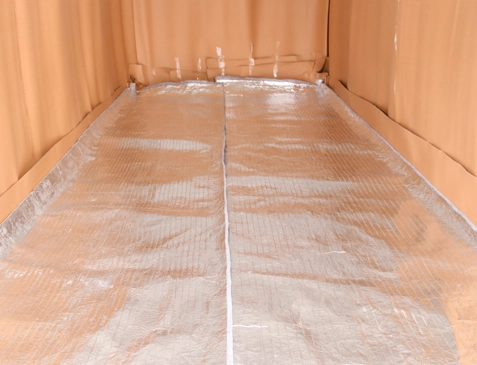
Install protective materials.
Position the empty flexitank.
Install the bulkhead or restraint system.
Connect the filling hose.
Fill to the specified volume and weight.
Secure the valve for transportation.
Discharge the liquid at destination.
The result is a containerized bulk liquid transport system without requiring drums, IBCs, or a dedicated tank container.
Industry best-practice guidance emphasizes proper container selection, flexitank installation, restraint, and loading because the complete system must manage the forces generated by liquid cargo during transport.
They are primarily used for compatible non-hazardous bulk liquids.
Common cargoes include:
Edible oils
Wine
Fruit juice and concentrates
Syrups
Glycerin
Latex
Lubricants
Base oils
Glycols
Liquid food additives
Compatible non-hazardous chemicals
MSC similarly identifies food-grade liquids, oils, beverages and non-hazardous chemicals as typical flexibag cargoes.
Cargo suitability must still be checked individually. Two liquids in the same general product category may require different film, valve or temperature specifications.
Capacity varies according to the design and cargo.
Flexitanks used in standard containerized transportation commonly fall within approximately 16,000 to 24,000 liters, although manufacturers may offer other configurations for specialized applications.
The correct capacity depends heavily on cargo density.
For example:
22,000 L × 1.10 kg/L = 24,200 kg of liquid
This is why buyers should provide both the required volume and liquid density when requesting a quotation rather than simply asking for the largest available flexi bag.
Most flexitanks used for international food-grade and chemical bulk transport are designed for single-trip use.
Single-use construction helps reduce cross-contamination concerns and eliminates the cleaning and return logistics associated with reusable transport tanks. MSC also describes its flexibags as single-use units.
After discharge, handling and recycling or disposal should follow applicable local requirements.
Do not select between them based on the wording alone.
If one supplier quotes a "flexitank" and another quotes a "flexi bag," first determine whether they are offering comparable systems.
Ask for:
Rated capacity and payload
Film and outer-layer construction
Cargo compatibility confirmation
Valve specification
Bulkhead and installation accessories
Filling temperature range
Required container specification
Relevant testing or quality documentation
Installation and technical support
For specialized cargoes, these factors become even more important.
BLT develops flexitank solutions for different liquid applications, including food-grade liquids, edible oils, industrial oils and compatible chemicals, as well as heat-resistant and other application-specific configurations.
For most bulk liquid shipping applications, flexitank and flexi bag describe the same basic transportation concept: a flexible liquid bladder used inside a shipping container.
The distinction becomes more useful at the technical level. A flexi bag may describe the flexible bladder itself, while a flexitank system can refer to the complete combination of the bladder, restraint components and shipping container.
For procurement, the most important question is therefore not "Is it called a flexitank or flexi bag?"
It is:
"Is this system correctly engineered for my cargo, payload, temperature and transportation conditions?"
That is the comparison that determines transportation safety, operational efficiency and total shipping cost.
Flexibag, flexi bag and flexi-tank are commonly used alternative terms in the bulk liquid logistics industry.
The standard international shipping configuration is normally based on a 20ft dry container, although specialized flexible liquid systems exist for other transport applications.
Standard container flexitanks are intended for compatible non-hazardous liquids. Dangerous goods require an appropriate approved transport system.
It depends on shipment size and logistics requirements. Flexitanks generally offer greater bulk payload efficiency, while IBCs can be more suitable when cargo must be divided into smaller handling units.
Yes. Food-grade flexitanks are widely used for edible oils, wine, juices, concentrates and other compatible liquid food products.
Provide the cargo name, density, volume, loading temperature, origin, destination and any food-grade or chemical compatibility requirements.