EN
EN
 es
es  ru
ru  CN
CN

If you have ever shipped palm oil from Southeast Asia in the winter, or sent glucose syrup into a northern European port in February, you already know the problem. The cargo leaves the loading site warm and pumpable. But somewhere in the middle of a 20-day sea voyage, as ambient temperatures drop, that liquid starts to thicken. By the time the container doors open at the destination, you are not looking at a free-flowing product. You are looking at something closer to paste, maybe even a semi-solid block.
This is not a rare problem. It is the normal consequence of transporting high-viscosity or temperature-sensitive liquids through varied climates. And the solution—one that logistics managers have been using for years—is remarkably straightforward: a flexitank heating pad.
But what exactly is this piece of equipment, how does it work, and when is it actually worth using? Let us walk through it.
Viscosity is simply a liquid's resistance to flow. Honey has high viscosity. Water has low viscosity. The challenge with bulk liquid transport is that many industrial and food-grade products—palm oil, glycerin, tallow, corn syrup—have viscosities that change dramatically with temperature. A liquid that pumps easily at 40°C can become sluggish at 15°C and nearly solid at 5°C.
When this happens at the discharge point, the consequences are predictable: longer unloading times, product left behind in the bag, extra labor, wasted money. In some cases, operators resort to improvised heating methods that are neither safe nor efficient. A properly designed heating pad removes this variable from the equation entirely. Heater pads help liquefy residues, ensuring more product is recovered during unloading.
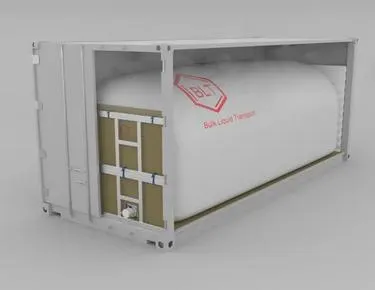
A flexitank heating pad is, at its simplest, a flat heating mat placed underneath the flexitank inside a standard 20-foot container. It does not heat the cargo during transit. It sits dormant for the entire journey and is only activated when the container arrives at the destination, right before discharge.
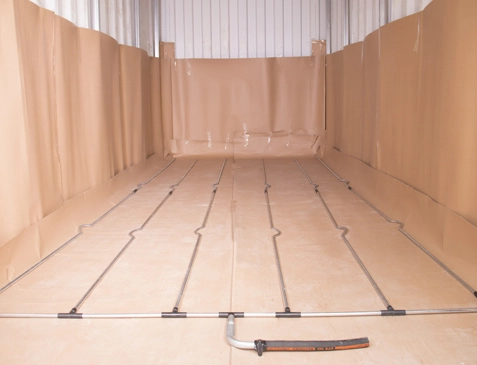
The pad works by circulating a heat source—either steam or hot water—through a network of tubes that cover the floor area beneath the flexitank. As heat transfers upward through the bag material, the cargo warms gradually from the bottom, regaining the fluidity needed for pumping.
Most heating pads on the market today are built from EPDM rubber, a synthetic material known for its excellent heat resistance and durability. EPDM can handle sustained exposure to high temperatures without degrading, which matters when you are running steam through the system for several hours at a time. Some models also incorporate galvanized iron tubes and insulating felt layers for additional thermal efficiency.
A key detail often overlooked: heating pads are reusable. This is not a single-use consumable. If handled correctly and cleaned properly between shipments, the same pad can serve multiple trips, which changes the cost calculation significantly.
Not all heating pads are the same, and picking the wrong type for your situation creates unnecessary headaches. Here is how they break down.
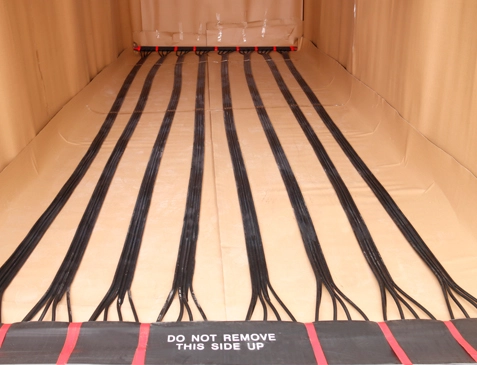
Steam Heating Pads (Rubber Hose Type): These are the most common variant. Steam flows through EPDM rubber tubes arranged in either a Z-type or U-type pattern across the container floor. They are ideal for unloading sites that already have a steam generation system in place—which includes most large manufacturing and processing facilities. Rubber hose pads handle temperatures up to approximately 100°C and work well for the majority of low-temperature-coagulated cargoes.
Steam Heating Pads (Iron Tube Type): Designed for higher-temperature applications. The iron tube construction can withstand more intense steam conditions and is suited for products that require stronger heating to reach a pumpable state. One trade-off: iron tube pads typically produce condensate that needs to be discharged, so your unloading site needs the appropriate drainage setup.
Electric Heating Pads: A newer option that is gaining traction in the market. Instead of steam, opting for an electric heating pad with temperature control allows operators to utilize internal resistance wires connected to a 220V or 380V power supply. The main advantage is temperature precision—electric pads allow operators to adjust the voltage for finer control, which matters when you are handling temperature-sensitive products that can be damaged by overheating. They also eliminate the need for a steam system at the unloading site, making them practical for locations with only electrical infrastructure.
Which type is best? It depends entirely on two things: the nature of your cargo and the facilities available at your discharge point. A palm oil shipment unloading at a refinery with a steam boiler will likely use a rubber hose steam pad. A specialty chemical unloading at a warehouse without steam access might require an electric alternative. A heating pad is only as useful as the infrastructure that supports it—if you cannot connect it, you cannot use it , which is a major operational difference compared to configuring a standard heating pad for water tank setups in fixed facilities.
Not every liquid cargo requires heating. Light oils and many chemicals remain pumpable across a wide temperature range and will discharge without assistance. Heating pads enter the conversation when you are dealing with products that have a known tendency to solidify or thicken at ambient temperatures.
The most common applications include: vegetable oils (palm oil being the dominant example), animal fats and tallow, glycerin, glucose and corn syrup, polyols, stearic acid, and certain industrial lubricants. If your product falls into one of these categories and your shipping route passes through regions where temperatures drop below 15–20°C, a heating pad is likely worth considering.
That said, heating pads are not designed for transit heating—they are strictly for discharge. If your cargo needs to be kept warm throughout the entire voyage, you will need a different solution altogether, such as an actively powered thermal liner or a temperature-controlled tank container.
Before purchasing a heating pad, ask yourself four questions:
What is the melting or softening point of your product? This determines the temperature range you need to achieve. Check the product’s technical data sheet—most suppliers publish viscosity curves that show how the material behaves at different temperatures.
What utilities are available at the unloading site? Steam or electricity? If steam, what pressure? If electric, what voltage (220V or 380V)? Match the pad type to the available infrastructure.
Does your product require condensate management? Iron tube steam pads produce condensate that needs proper drainage. Rubber tube steam pads typically do not. Electric pads have no condensate at all. Factor this into your site preparation.
Are you working with a single-product line or multiple cargo types? If you regularly ship different liquids with different temperature requirements, consider electric pads for their adjustable temperature control. If you always ship the same product through the same route, a standardized steam pad may be the simpler and more economical choice.
Installation errors are the most common cause of heating pad failures, and most of them are avoidable. The procedure itself is not complicated, but skipping steps leads to problems.
The pad goes directly onto the container floor, underneath the protective corrugated paper layer and the flexitank itself. This bottom-position arrangement ensures the largest possible contact area for heat transfer. Before placing anything, inspect the container floor thoroughly—nails, stones, metal fragments, or any sharp debris can puncture the pad's tubing once pressure is applied. A punctured heating pad cannot be repaired in the field.
The inlet and outlet hoses should be positioned at the rear door end of the container, then the pad is unrolled toward the front. Hoses are typically fed through small holes cut in the bottom of the bulkhead and secured with cable ties. After installation, but before loading cargo, perform a pressure test to confirm there are no leaks.
On the discharge day, the procedure is straightforward: connect the hoses to the steam or hot water supply, increase pressure gradually, and monitor the product temperature throughout the process. Most operators keep the heat source connected until approximately one-quarter of the product remains, then slowly reduce pressure. Allow the pad to cool before disconnecting and removing it.
One safety note that cannot be overstated: always follow the manufacturer's maximum pressure and temperature specifications. Overheating a flexitank is a real risk if the temperature is not managed. Quality heater pads include thermostatic controls to prevent this, but operator attention remains the final line of defense.
A heating pad adds cost to a shipment, so the calculation is always: does the benefit outweigh the expense? In many cases, the answer is yes—but it depends on the alternative.
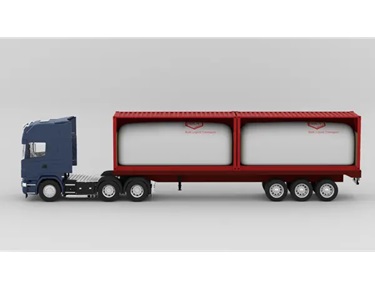
For shipments where product solidification is likely, the choice is rarely between "heating pad" and "no solution". In the broader bulk logistics sector, finding the right tank heating pad configuration usually comes down to choosing between a flexible setup and a rigid tank container (ISO tank). Tank containers can maintain temperature throughout transit but come with significantly higher equipment costs, cleaning fees, and repositioning charges. Flexitanks are a versatile and cost-effective alternative to tank containers, and when paired with a properly matched heating pad, they can handle high-viscosity cargoes that would otherwise require more expensive equipment.
The tipping point is usually the product itself. If your cargo would require a dedicated temperature-controlled ISO tank, a flexitank with a heating pad almost always comes out ahead on total logistics cost. If your cargo stays liquid at ambient temperatures, skip the pad and keep things simple.
Flexitank heating pads are not a universal solution. They solve one specific problem—discharging cargo that has thickened or solidified due to cold temperatures during transit—and they solve it efficiently when matched correctly to the product and the unloading site.
The key is being honest about your needs. If your product viscosity data suggests solidification is unlikely on your shipping route, you do not need a heating pad. But if the data shows otherwise, having the right pad ready at the discharge point can mean the difference between a 90-minute unloading and a half-day ordeal.
That is really what this equipment comes down to: eliminating variables that cost time, waste product, and frustrate your receiving team. When you look at it that way, a heating pad is not an accessory. It is insurance.
Q: What is the maximum temperature a flexitank heating pad can reach?
A: Most steam heating pads operate safely up to approximately 100°C (212°F) at the inlet, though some iron tube variants can handle higher temperatures. Always follow the manufacturer's specifications for your specific model—overheating can damage both the heating pad and the flexitank itself.
Q: Can a flexitank heating pad be used during transit to keep cargo warm throughout the journey?
A: No. Flexitank heating pads are designed exclusively for pre-discharge heating at the destination. They require an external steam or electrical connection that is not available during transit. If your cargo needs to be kept warm throughout the entire voyage, you will need a temperature-controlled tank container or an actively powered thermal liner solution.
Q: What is the difference between a rubber hose steam heating pad and an iron tube steam heating pad?
A: The rubber hose type uses EPDM tubes and is ideal for standard heating applications where condensate discharge is not required. The iron tube type is built for higher-temperature needs and typically produces condensate that must be properly drained at the unloading site. Your choice depends on the heating requirements of your cargo and the facilities available at the discharge point.