EN
EN
 es
es  ru
ru  CN
CN

For full-container shipments of non-hazardous liquids, a flexitank is usually the most efficient choice because it maximizes payload while reducing packaging and handling. IBCs are better when the receiver needs smaller, palletized quantities or staged discharge, while drums remain practical for small lots, multiple products, or operations without bulk unloading equipment.
The best option therefore depends on four factors: cargo classification, shipment volume, destination handling capability, and total logistics cost.
| Factor | Flexitank | IBC | Drums |
| Typical unit capacity | Up to about 24,000 L in a standard 20ft container | Commonly 1,000–1,250 L | Commonly around 200 L |
| Space utilization | Excellent | Good | Moderate |
| Loading/unloading | Pump-based | Forklift + valve/pump | Forklift/manual handling + pump |
| Packaging units per shipment | One | Multiple | Many |
| Return logistics | Usually none | May be required | Depends on packaging system |
| Best suited for | Full-load non-hazardous liquids | Medium-volume or distributed use | Smaller or mixed-volume shipments |
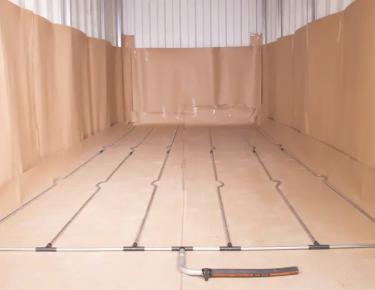
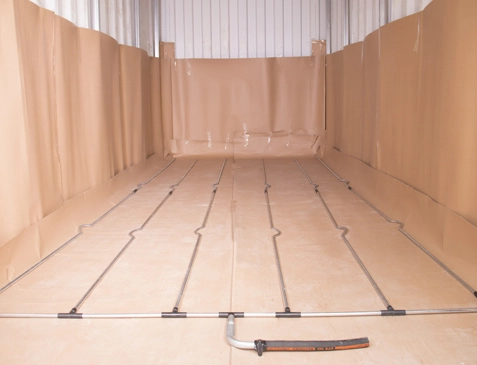
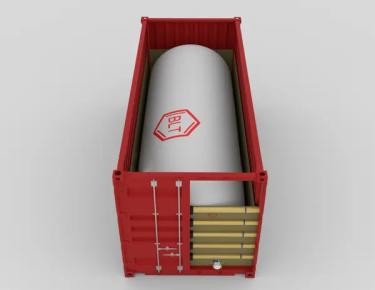
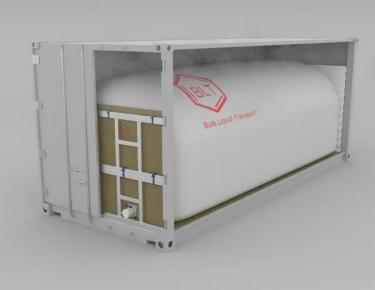
A flexitank container system converts a standard 20ft general-purpose container into a bulk liquid transport system. The Container Owners Association notes that flexitanks are normally designed for compatible non-dangerous liquids and commonly operate up to 24,000 liters or 24,000 kg, subject to system, cargo and transport limits.
IBCs and drums sacrifice some container utilization but provide greater flexibility after arrival. IBCs can be moved individually by forklift, while drums are particularly useful when customers need relatively small quantities rather than an entire bulk load.
Container utilization is where flexitanks normally have their strongest commercial advantage.
Instead of loading dozens of individual packages, flexi bags for containers use most of the available container interior for one liquid cargo. As a flexitank company, BLT offers flexitank capacities for different cargo densities and notes that loading volume and weight must be selected according to container, carrier and route restrictions.
A typical IBC holds around 1,000 liters, while a conventional liquid drum is roughly 200 liters. This means transporting the same volume can require approximately five drums for every 1,000-liter IBC—and many individual packages for one container shipment. Common IBC capacities include approximately 275 and 330 gallons.
For exporters regularly shipping 18,000–24,000 liters of one compatible product, flexitank transportation can therefore reduce freight cost per ton by putting more saleable liquid into each container.
Purchase price alone does not determine the cheapest packaging. Buyers should compare the total landed logistics cost.
With drums, costs may include the drums themselves, pallets, filling labor, forklift handling, warehouse space and disposal or return management. IBCs reduce the number of individual units but still require pallet handling and occupy more packaging volume than bulk systems.
A container flexibag requires installation and pumping equipment, but one flexitank can replace many individual packages. Single-use systems also avoid the cleaning and repositioning normally associated with reusable bulk packaging.
This is why flexi bag containers are particularly attractive for one-way international shipments where the receiver can discharge the cargo directly into storage tanks.
However, IBCs may offer better overall economics when customers consume liquids gradually or distribute them to several locations. Drums can still be the sensible choice for low-volume orders where bulk handling infrastructure would add unnecessary complexity.
For edible oils, including soybean oil, palm oil, sunflower oil and similar products, flexitanks are commonly chosen for full-container exports because of their high payload and straightforward pump loading and discharge. BLT specifically provides flexitank solutions for edible oils and other food-grade liquids.
For juices, syrups, beverage ingredients and other food liquids, food-grade flexitanks can provide an efficient bulk option when appropriate food-contact materials and hygiene controls are used.
For non-hazardous chemicals, lubricants, glycerin, latex and industrial oils, the decision requires more technical evaluation. Chemical classification alone is not enough: material compatibility, cargo density, loading temperature, viscosity and discharge conditions should all be checked.
Most importantly, flexitanks must not be treated as packaging for dangerous goods simply because a liquid can physically be pumped into the bag. COA guidance specifies flexitank systems for compatible non-dangerous goods.
For regulated hazardous products, appropriately certified IBCs or drums may therefore be required instead.
A standard 20ft flexitanks container setup commonly carries up to approximately 24,000 liters, although the correct volume depends on liquid density, container payload limits, flexitank design and carrier requirements.
For a full-container shipment of one non-hazardous liquid, it often delivers a lower packaging and handling cost per ton because fewer packaging units are required and container space is used more efficiently. The actual saving depends on the route, product density, packaging purchase price, labor and destination handling.
Most mainstream container flexitanks are designed for single-use transportation. This eliminates return logistics and cleaning between shipments, but the used flexitank and associated materials should be handled according to local recycling and disposal requirements.
Choose IBCs when you need palletized storage, partial consumption, multiple delivery points or easier internal distribution. Choose drums for smaller quantities, multiple products or facilities that cannot receive bulk liquid.
Choose flexi containers when you are shipping a large volume of one compatible non-hazardous liquid and want to maximize the payload of a 20ft container.
For exporters working with recurring bulk shipments, selecting the right flexitank capacity should start with the cargo name, density, loading temperature, required volume, origin, destination and discharge conditions. Matching those variables correctly is more important than simply selecting the largest available flexitank.