EN
EN
 es
es  ru
ru  CN
CN

For most one-way international shipments of non-hazardous bulk wine, a wine flexitank is generally more cost-efficient than an ISO tank. It can carry around 24,000 liters in a standard 20ft container, requires no tank repositioning after discharge, and eliminates ISO tank cleaning between shipments.
An ISO tank remains valuable when a shipper needs a reusable stainless-steel system, specialized temperature management, or established closed-loop logistics. For many wineries, bulk wine traders and bottlers, however, a purpose-designed wine flexitank offers the better balance of payload, freight cost, product protection and operational flexibility.
Both systems can transport wine in bulk, but their logistics models are very different.
| Factor | Wine Flexitank | ISO Tank |
| Construction | Food-grade flexible multilayer system inside a container | Reusable stainless-steel tank |
| Typical wine capacity | Up to about 24,000 L | Commonly around 20,000–26,000 L |
| Equipment availability | Uses standard 20ft containers | Requires dedicated tank equipment |
| Cleaning after discharge | No tank cleaning for single-use system | Cleaning required |
| Empty repositioning | Normally not required | Often required |
| Cross-contamination control | New liquid-contact surface | Depends heavily on cleaning history |
| Oxygen protection | Specialized barrier required for wine | Very low oxygen permeability |
| Best application | One-way international bulk wine shipments | Reusable or specialized tank logistics |
Modern wine flexitanks are not simply standard liquid bags. They are engineered specifically to reduce oxygen transmission and protect wine from external contamination.
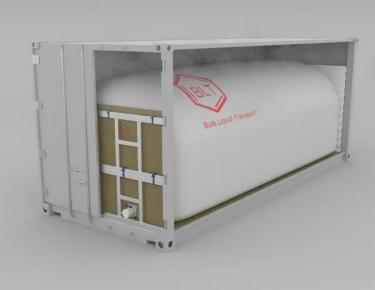
BLT's Wine Flexitank, for example, is designed for standard 20ft containers and incorporates a dedicated oxygen-barrier structure for wine transportation. BLT lists capacities from 16 to 26 kL depending on shipment requirements and applicable payload restrictions.
A wine flexitank commonly carries up to approximately 24,000 liters, depending on flexitank specification, wine density, container payload and transport restrictions. Kuehne+Nagel similarly lists flexitank capacity of up to 24,000 liters for bulk beverages.
The real economic advantage is not necessarily that a flexitank always carries more wine than an ISO tank. ISO tanks may also reach approximately 24,000–26,000 liters. The difference lies in the complete logistics cycle.
An ISO tank must normally be:
Positioned at the loading point
Cleaned and prepared to food-grade standards
Returned or repositioned after discharge
Managed through specialized tank-container networks
A flextank installed inside a suitable standard shipping container uses the existing dry-container network. After the wine is discharged, there is no empty ISO tank to reposition.
This can make flexitanks particularly competitive on one-way export routes or destinations where ISO tank availability and cleaning infrastructure are limited.
Bulk transportation itself also offers a major efficiency advantage over shipping bottled wine. Wine industry references indicate that a container may carry roughly 9,000–10,000 liters when wine is already bottled, compared with as much as 24,000 liters in a flexitank.
For high-volume wines bottled close to their destination market, this difference can substantially reduce freight and packaging cost per liter.
Yes—provided the flexitank is specifically designed for wine and proper loading, transport and discharge procedures are followed.
Wine is sensitive to oxygen, temperature and contamination, so selecting a general-purpose liquid flexitank purely on price is a mistake.
A professional flex tank wine solution should be evaluated for:
Oxygen transmission: Excessive oxygen ingress can accelerate oxidation and affect aroma, color and freshness. Modern wine flexitanks therefore incorporate oxygen-barrier technologies such as EVOH or specialized barrier films.
Food-contact materials: All liquid-contact components—including inner films, valves and fittings—should meet the relevant food-contact requirements for the destination market.
Odor and taint protection: Wine can absorb undesirable aromas. Barrier construction and proper container inspection help reduce this risk.
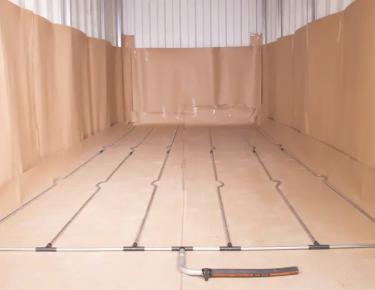
Container condition: The container must be dry, clean, structurally sound and free from sharp objects, strong odors and contamination.
Recent research from New Zealand's Bragato Research Institute notes that modern flexitanks using EVOH barrier layers have significantly improved oxygen performance and can be suitable even for sensitive wines when the correct specifications are used.
Wine Australia's transport research also found no major sensory differences between wines shipped in flexitanks and ISO tanks in its trials. ISO tanks showed some marginal advantages associated with lower peak temperatures, but flexitanks offered advantages in cost, availability and contamination management.
This is why selecting a wine-specific system—not merely searching for the cheapest flexitank vin product—is critical to protecting cargo value.
For international ocean freight, flexitanks are often the preferred solution because they convert widely available standard containers into bulk wine transport units.
They are especially suitable when:
Approximately 18,000–24,000 liters of one wine are shipped
The route is primarily one-way
Destination bottling facilities can receive wine in bulk
Reducing freight cost per liter is important
ISO tank availability at origin or destination is limited
ISO tanks become more attractive when the shipper already operates within a reliable tank-return network, requires stainless-steel equipment, or has specific temperature-control and operational requirements.
Rail and intermodal transportation require additional attention. Flexitank construction, container preparation, securing systems and carrier approval should be appropriate for the forces encountered during transport. BLT lists its wine flexitank for inland, marine, railway and intermodal freight applications.
The decision therefore should not be based only on the ocean freight quotation. Exporters should compare the complete door-to-door cost, including positioning, filling, container transport, cleaning, demurrage risk, equipment return and discharge.
For many one-way international bulk wine shipments, yes. Flexitanks generally simplify equipment positioning, avoid tank cleaning and return logistics, and provide competitive payload efficiency. ISO tanks may be preferable where reusable closed-loop transport or specialized tank capabilities justify the additional logistics.
Wine can be affected by oxygen during transportation, which is why wine-specific flexitanks use oxygen-barrier materials. The barrier performance of the complete system should be checked when selecting a supplier, particularly for oxygen-sensitive wines and long transit times.
Wine flexitanks are generally designed as single-use systems. This provides a fresh liquid-contact surface for each shipment and avoids the tank-cleaning cycle required for reusable ISO equipment.
Not automatically. Stainless steel provides excellent barrier performance, but wine quality also depends on previous cargo history, cleaning, temperature exposure, loading procedures and transit conditions. Purpose-designed wine flexitanks can provide strong quality protection when correctly selected and operated.
A supplier should review the wine type, alcohol content, density, loading temperature, required volume, origin, destination, transport mode, expected transit time and discharge conditions.
For exporters looking to transport wine in bulk, the most important comparison is therefore not simply "flexitank versus ISO tank." It is the total logistics cost and quality risk per liter delivered.
For regular one-way shipments using standard container networks, a purpose-engineered BLT Wine Flexitank can provide a strong combination of high payload, oxygen protection, simplified logistics and lower handling complexity. For wine exporters evaluating a new trade lane, reviewing the cargo specification and complete route before selecting the flexitank capacity is the best place to start.