EN
EN
 es
es  ru
ru  CN
CN

For international bulk liquid shipping, choose a flexitank manufacturer based on proven product compliance, material quality, cargo compatibility expertise, manufacturing traceability, and global technical support—not simply the lowest unit price.
A reliable supplier should be able to show how its flexitanks are manufactured and tested, recommend the correct specification for your cargo, support installation and loading, and respond quickly if problems occur at origin, in transit, or at destination.
When comparing flexitank manufacturers, buyers should evaluate five areas:
Industry compliance and testing: Ask for current certificates and test reports applicable to the flexitank model being purchased.
Manufacturing control: Determine whether critical materials and production processes are controlled and traceable.
Cargo experience: The supplier should understand density, temperature, viscosity and chemical compatibility—not simply flexitank capacity.
Quality consistency: A sample product is less important than consistent quality across thousands of units.
International service: Installation guidance, loading support and emergency response can be just as important as the flexitank itself.
The Container Owners Association's Flexitank Code of Practice includes requirements covering manufacturing audits, materials and valve testing, operating instructions and performance testing such as rail impact tests under PAS 1008. These are useful reference points when evaluating flexi tank manufacturers.
Certificates, however, should not be treated as a substitute for supplier due diligence. Ask which specific factory and flexitank models are covered and whether batch-level production records can be traced.
Most modern flexitank systems use polyethylene liquid-contact layers combined with a strong woven polypropylene outer layer. Different designs may use single-layer or multilayer structures, while specialized cargoes can require barrier materials such as EVOH.
The number of layers alone does not determine quality. Buyers should also examine:
Film performance: Tensile strength, elongation, sealing quality and resistance to puncture or impact matter during container movement.
Valve integrity: Filling and discharge valves are critical potential leakage points and require reliable materials, sealing and testing.
Bulkhead system: The retaining system must manage the forces created by thousands of liters of moving liquid.
Traceability: Strong flexitank suppliers should be able to identify production batches and investigate quality issues efficiently.
For food-grade cargoes, applicable food-contact requirements are another essential consideration. Requirements can vary by market and product, so buyers should confirm the appropriate compliance documentation rather than assuming every food-grade flexitank is suitable for every destination.
A professional flexitank supplier should ask about your cargo before recommending a product.
Important information includes:
Product name and Safety Data Sheet where applicable
Cargo density
Required loading volume
Loading temperature
Expected transit temperature
Viscosity
Food-grade or industrial application
Sensitivity to oxygen or moisture
Origin, destination and transport route
Flexitanks are primarily intended for compatible non-hazardous bulk liquids. Current international guidance also emphasizes checking chemical compatibility and consulting the SDS because even cargo not regulated as dangerous goods can present particular transport risks.
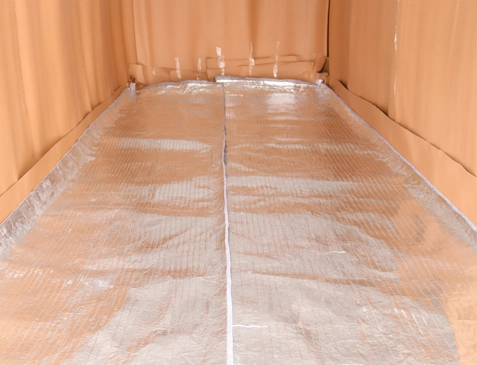
For example, edible oils may use a standard food-grade flexitank, while highly viscous products may require heating solutions for efficient discharge. Oxygen-sensitive liquids may benefit from specialized barrier constructions. DHL similarly notes that oxygen ingress, temperature control and high viscosity can require cargo-specific flexitank designs.
This is an important distinction between experienced flexitanks suppliers and companies that simply sell standard bags: the correct recommendation should start with the cargo, not with available inventory.
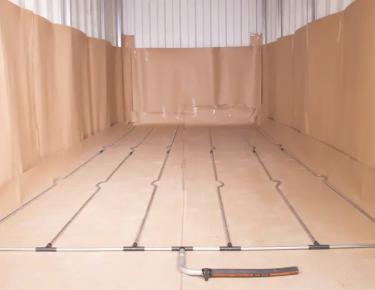
Even a well-manufactured flexitank can be compromised by an unsuitable container, incorrect installation, poor loading practices or improper discharge procedures.
Your supplier should therefore provide clear procedures for:
Container inspection and selection
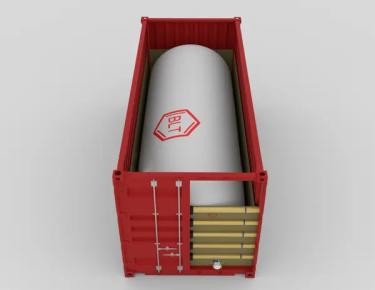
Flexitank installation
Bulkhead installation
Valve connection
Loading and filling
Destination discharge
Emergency and claims handling
This becomes especially important for exporters operating across multiple countries. A flexitank company with international technical coverage can help standardize procedures between the shipper, warehouse, freight forwarder and consignee.
For example, BLT provides container-selection guidance, installation and loading/unloading support, risk assessment and 24-hour emergency response through its international service system.
For regular shipments, service capability should therefore be included in the total supplier cost calculation. Saving a small amount on the flexitank itself may offer little value if installation problems, cargo residue, leakage or delayed technical response disrupt an international shipment.
Look for recognized flexitank-industry testing and quality-management credentials, including relevant COA compliance documentation, PAS 1008 testing and ISO quality-management systems. Food-grade applications may also require applicable FDA, EU or other destination-market food-contact compliance.
Always verify whether the documentation applies to the actual manufacturer and flexitank model being purchased.
Evaluate production history, manufacturing capacity, quality-control procedures, batch traceability, cargo compatibility testing, technical documentation, installation support and claims response. Established customer references and experience with major shipping routes are also valuable indicators.
No. Cargo density, temperature, viscosity, chemical compatibility and oxygen sensitivity can change the required construction and capacity. A qualified supplier should review the cargo before confirming the flexitank specification.
Direct purchasing can provide advantages in technical communication, traceability, customization and pricing, especially for large-volume buyers. However, the manufacturer's ability to provide destination support should also be considered. A technically capable local or international distributor can be valuable when backed by the original manufacturer.
Provide the cargo name, SDS if applicable, density, loading temperature, quantity per shipment, expected annual volume, loading location, destination port and any special discharge requirements.
This allows flexitank suppliers to recommend the appropriate capacity and construction instead of quoting purely on price.
When selecting among flexi tank manufacturers, the safest procurement approach is to compare the complete transport solution: product quality + cargo compatibility + manufacturing control + technical service + global response capability.
BLT has specialized in flexitank manufacturing since 2007 and states that it operates an integrated supply chain, product traceability system and service network covering more than 150 major cities and 500 international trading ports. For importers and exporters evaluating a long-term flexitank supplier, these are the types of capabilities worth verifying before placing an order.